
Overview
Oman is an independent sovereign state located in Asia, specifically within the Western Asia subregion. It covers approximately 309,500 km² and is home to an estimated 5,343,630 people. The country has coastline along international waters, which has shaped its trade routes, climate, cuisine, and cultural exchanges with the rest of the world. Its capital is Muscat, which serves as the political and (in most cases) economic centre of the country, hosting the seat of government and the principal international airport.
This profile pulls together the structured facts that most readers want at a glance — capital, currency, languages, borders — and links onward to the maps and neighbouring countries you are likely to need next. Every figure on this page is rendered server-side from a single dataset, so what you see here matches the regional indexes, statistics rankings, and continental hubs elsewhere on MapVista.
For travellers, students, journalists, and the merely curious, the goal is simple: a single readable page per country that answers the questions you actually asked, without redirecting you to a sign-up screen or a paywall. Citizens of Oman are commonly described as Omani, a demonym you will encounter in news coverage and academic writing alike.
Geography & borders
Oman is a mid-sized country, covering approximately 309,500 km² of land in Asia (specifically the Western Asia subregion). The country has coastline along international waters, which has shaped its trade routes, climate, and cultural exchanges with the rest of the world. Its approximate geographic centre lies at 21.00° N, 57.00° E, placing it in the northern hemisphere on a line with several other Western Asia nations. Oman shares land borders with 3 neighbouring states, a typical configuration for Western Asia which makes overland travel and cross-border trade central to daily life.
Bordering countries
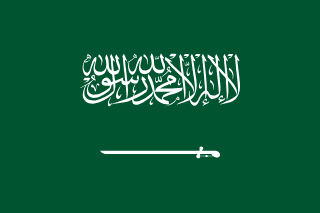
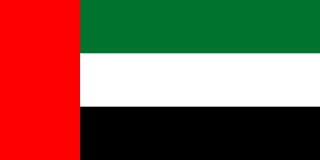
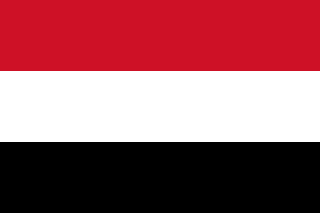
Oman shares land borders with the following 3 neighbours. Each one links to its own full profile so you can hop around the region without losing your bearings:
Live map
Map data © OpenStreetMap contributors, ODbL. · Open in OpenStreetMap · Open in Google Maps
People, demographics & density
With an estimated 5,343,630 residents, Oman is a mid-sized population. That works out to roughly 17.3 people per square kilometre, a low density that reflects vast underpopulated terrain — deserts, mountains, forests, or polar landscape that limits permanent settlement. The capital, Muscat, anchors the country's political and often economic life and is usually the first city most international visitors encounter. Citizens of Oman are commonly described as Omani.
Compared with the global mean of roughly 60 people per square kilometre, Oman's figure of 17.3 people / km² places it well below the global average, reflecting either vast remote territory, harsh climate, or a small population spread across a large area.
Languages, currency & culture
Culturally, Arabic is the sole official language in Oman, while Omani rial (OMR) is the official currency. Like every country in the catalogue, the linguistic situation on the ground is often more layered than the official picture, with regional languages, immigrant communities, and minority tongues woven through everyday life.
Official and recognised languages
- ArabicISO 639 code: ara
Official currencies
- Omani rialISO 4217: OMR · ر.ع.
Language and currency data are drawn from open sources and reflect the official position rather than the full sociolinguistic picture on the ground. Many countries recognise minority and regional languages in addition to the official ones listed here, and some use multiple currencies in practice — particularly in border regions and tourist economies.
Practical information
Oman operates on a single time zone, UTC+04:00, and uses the country-code top-level domain .om online. Vehicles drive on the right-hand side of the road. Oman is a recognised member state of the United Nations.
- Time zonesUTC+04:00
- Top-level domain.om
- Driving sideRight
- UN memberYes
- LandlockedNo
- IndependentYes
- DemonymOmani
Maps & downloads
The flag image above is available in both raster and vector format. For a full-resolution download, right-click and save the linked file. Map links open in your preferred mapping provider so you can zoom into specific regions or plan a route. For deeper terrain and elevation data, our geographic resource library collects the best free atlases.

About this profile
This page is one of 250 country profiles on MapVista. The structured facts are sourced from open datasets that aggregate official records — see our methodology for the full list of sources and how we handle disputes, succession, and edge cases. The narrative paragraphs are written to give context to the numbers, but the figures themselves are not invented; if a value is missing it is shown as a dash rather than a guess.
If you spot an out-of-date figure or a misclassification, please reach us via the contact page. We refresh the underlying dataset regularly and corrections are applied at the next rebuild.